
Just Eat the Candy: A Gentle Nutrition Guide to Halloween
Why Does Halloween Candy Feel Impossible to Resist?
Be honest: did you buy Halloween candy early because it was on sale, only to find yourself buying a second bag this week because the first one "mysteriously" disappeared?
For many people, Halloween is the only time of year candy even crosses the threshold of the house. So when those bags hit the pantry, your candy-restricted brain can hear their siren call—even behind closed doors.
You try to ignore them, hold out as long as you can, and then, after a stressful day, eat a few pieces. And then a few more.
Suddenly, the guilt and shame spiral kicks in: "I blew it, I have no self-control, I might as well finish the bag. Then, at least, I don't have to think about it anymore."
Here is your gentle reminder: you don't lack willpower. You’re just trapped in the restriction cycle.
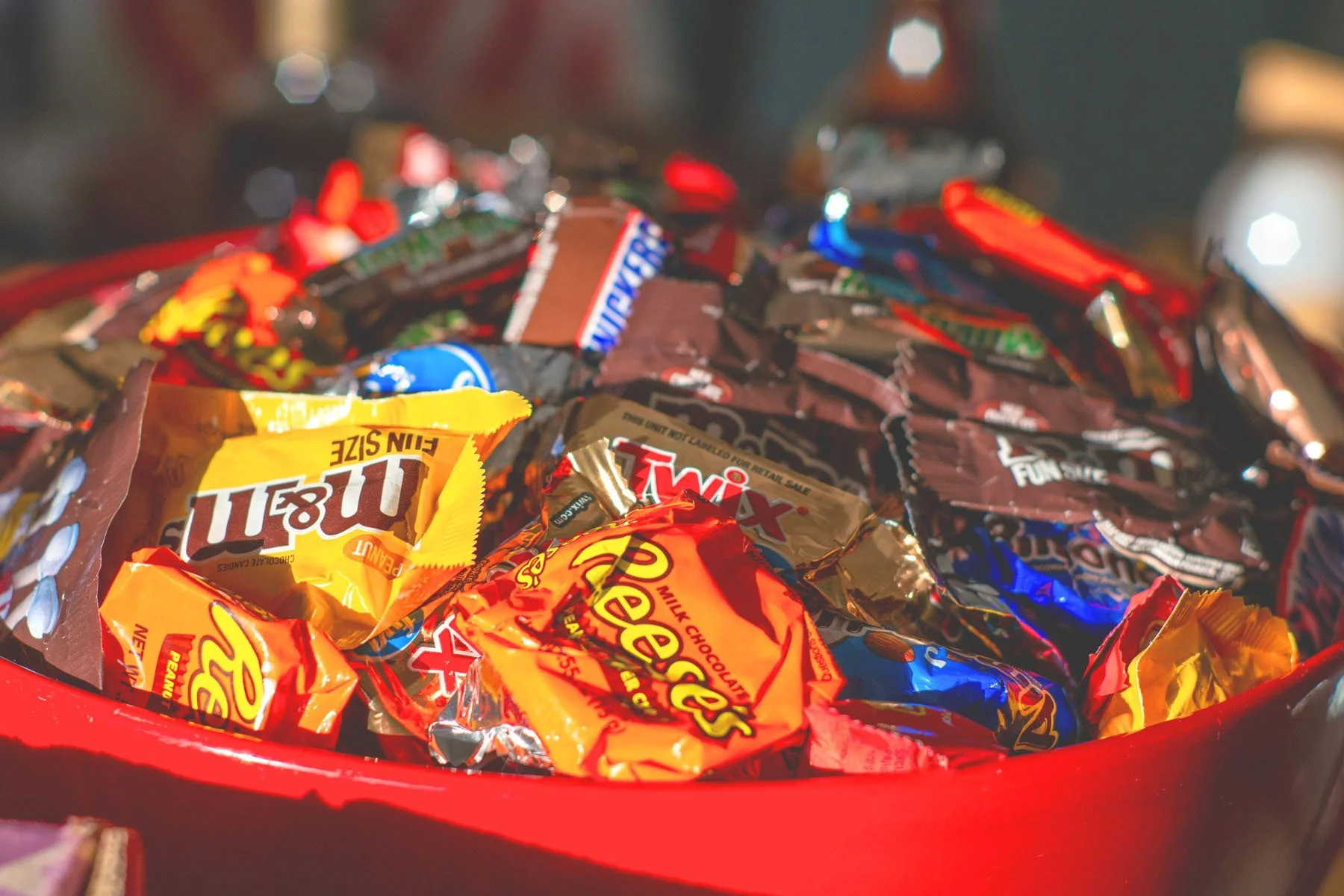
The Psychology of the Halloween Restriction/Binge Cycle
When a food is labeled as "forbidden" or "once-a-year," it becomes magnetic. Add an empty stomach to the mix, and your body naturally seeks out quick, accessible energy. That makes it almost impossible not to eat candy to the point of feeling physically uncomfortable.
The secret to enjoying treats without the panic or the physical crash isn't stricter rules—it's unconditional permission to eat and baseline nourishment.
Eating regular, satisfying meals throughout the day keeps your energy steady so candy can just be a fun part of the holiday, not a desperate fix for low blood sugar or a taboo temptation.
3 Practical Ways to Enjoy Halloween Candy Without Guilt
Here are a few quick, actionable ways to keep your body nourished and break the restriction cycle:
Serve a cozy, low-effort dinner before trick-or-treating: A warm pot of chili topped with cheese and sour cream, paired with cornbread or tortilla chips, delivers plenty of protein, fiber, and complex carbs to keep you full and satisfied.
Don't "save room" for treats: Skipping lunch or dinner to make up for candy all but guarantees an energy crash and overeating later.
Keep candy accessible after Halloween ends: Breaking the restriction mindset requires having ongoing access to the formerly restricted item. Pick your favorite treat and make a point of keeping it around so you can have it whenever you want.
When your body knows it's consistently fed and that candy isn't a "one-day-only" event, the power shifts back to you. You can honor your hunger, eat your favorite chocolate bar or sour gummy, and enjoy it all without the side of guilt.
Need Support Cultivating Unconditional Permission to Eat?
If the idea of unconditional permission around food still feels overwhelming or challenging, you don't have to navigate it alone. Here are a few ways to dive deeper:
📖 Read the Intro Guide: New to the non-diet approach? Start with our blog post on Intuitive Eating 101 to learn how to honor your hunger and make peace with food.
🎓 Take the Self-Paced Course: Ready to break free from the diet cycle at your own pace? Check out the Online Intuitive Eating for Skeptics Program for step-by-step guidance.
🎧 Listen to the Podcast: We dive deep into what diet culture is and how it impacts our relationship with food on Hey Monica: Listen to "The One About Diet Culture".
💬 Work With Me 1-on-1: Looking for personalized support rooted in weight inclusivity and intuitive eating? Explore 1-on-1 nutrition counseling.
-
Food guilt stems from labeling foods as "good" or "bad." Remind yourself that candy provides quick carbohydrates and emotional satisfaction—it does not define your health or self-worth. Instead of punishing yourself with compensation or restrictions the next day, focus on returning to regular, balanced meals.
And don’t forget to give yourself permission and access to eat foods you enjoy (like candy) on a regular basis.
-
Avoid referring to candy as "junk," "trash," or a "special reward for being good."
Offer candy alongside meals or snacks so it isn't elevated to a forbidden status or something that needs to be “earned.” Let kids tune into their own fullness cues.
Normalizing candy as just another type of food helps children build a neutral, healthy relationship with sweets long-term.
-
Out-of-control feelings around candy are usually a reaction to physical or mental restriction. If you've been skipping meals or telling yourself candy is off-limits, your body naturally drives you to eat as much as possible while it's available.
Give yourself full, unconditional permission to eat the candy, ensure you are eating enough overall throughout the day, and keep the treats accessible beyond the holiday.
If you find that stress or uncomfortable feelings are also driving the urge to eat, explore our guide on how to stop emotional eating for gentle, practical strategies to navigate those moments.
The information provided is for educational and informational purposes only. It is not intended to be medical advice or to diagnosis, treat, cure or prevent any disease. This information does not replace a one-on-one relationship with a physician or healthcare professional. Dietary changes and/or the taking of nutritional supplements may have differing effects on individuals.
To learn more about how working with a nutritionist could help you, schedule a free 15-minute call.