Posts in Gentle Nutrition
Confessions of a Freezer Squirrel: Getting Food Scrappy

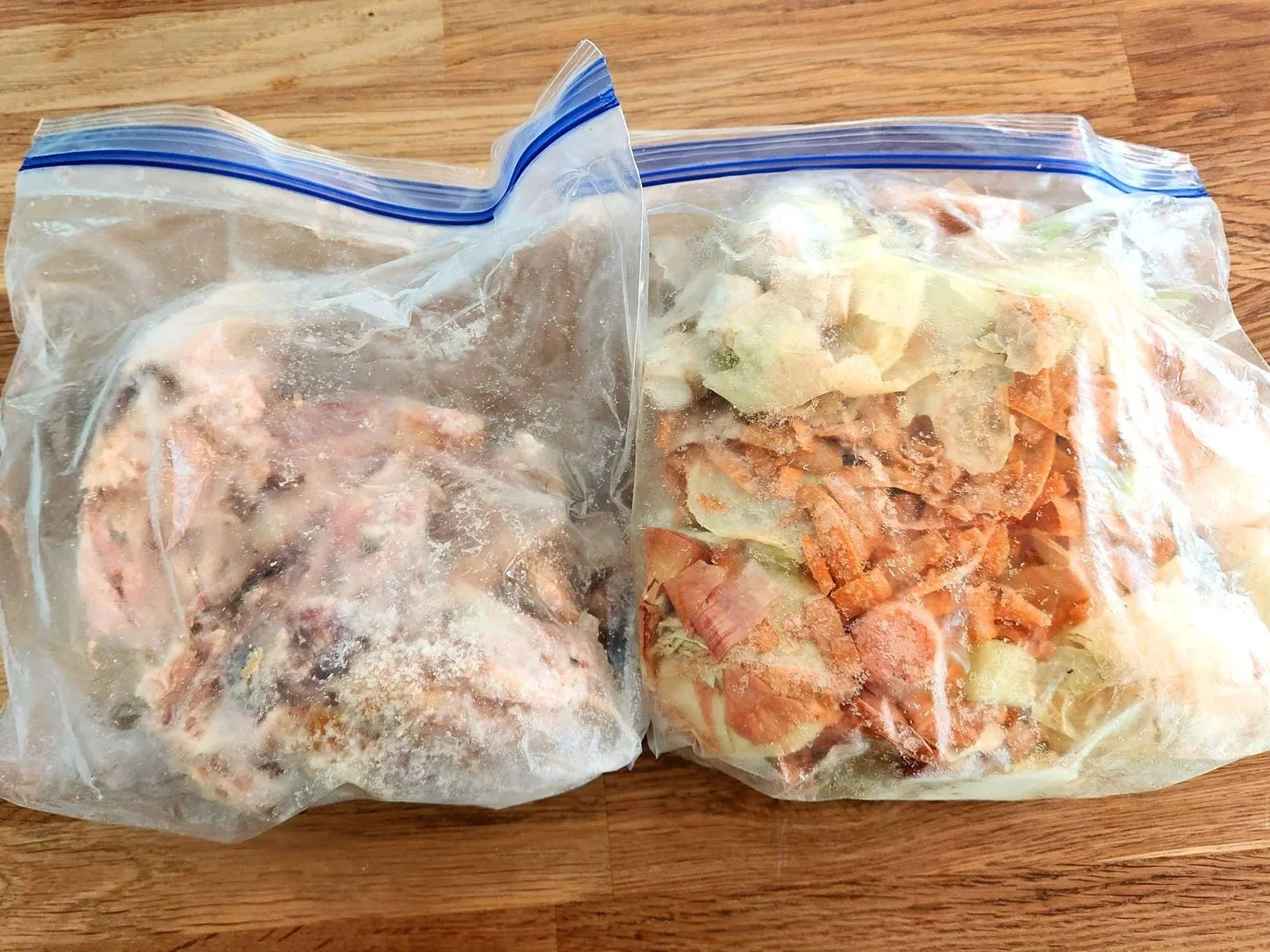
Today we’re closing out the series with my absolute favorite kitchen tactic: getting scrappy.

While it isn't strictly zero-waste cooking, it shares the same core philosophy. Think of your freezer as a pause button. Food in the freezer is like mosquitoes trapped in amber—we are preserving something today so we can extract it in the future to build an island of extinct dinosaurs.

Wait. No. That’s Jurassic Park.

We are preserving food that would otherwise go to waste so we can add instant flavor, delight, and whimsy to future meals! Here is how to embrace your scrappy side and turn kitchen leftovers into flavor gold.

Read More

Confessions of a Freezer Squirrel: Cooking Math is the Best Math

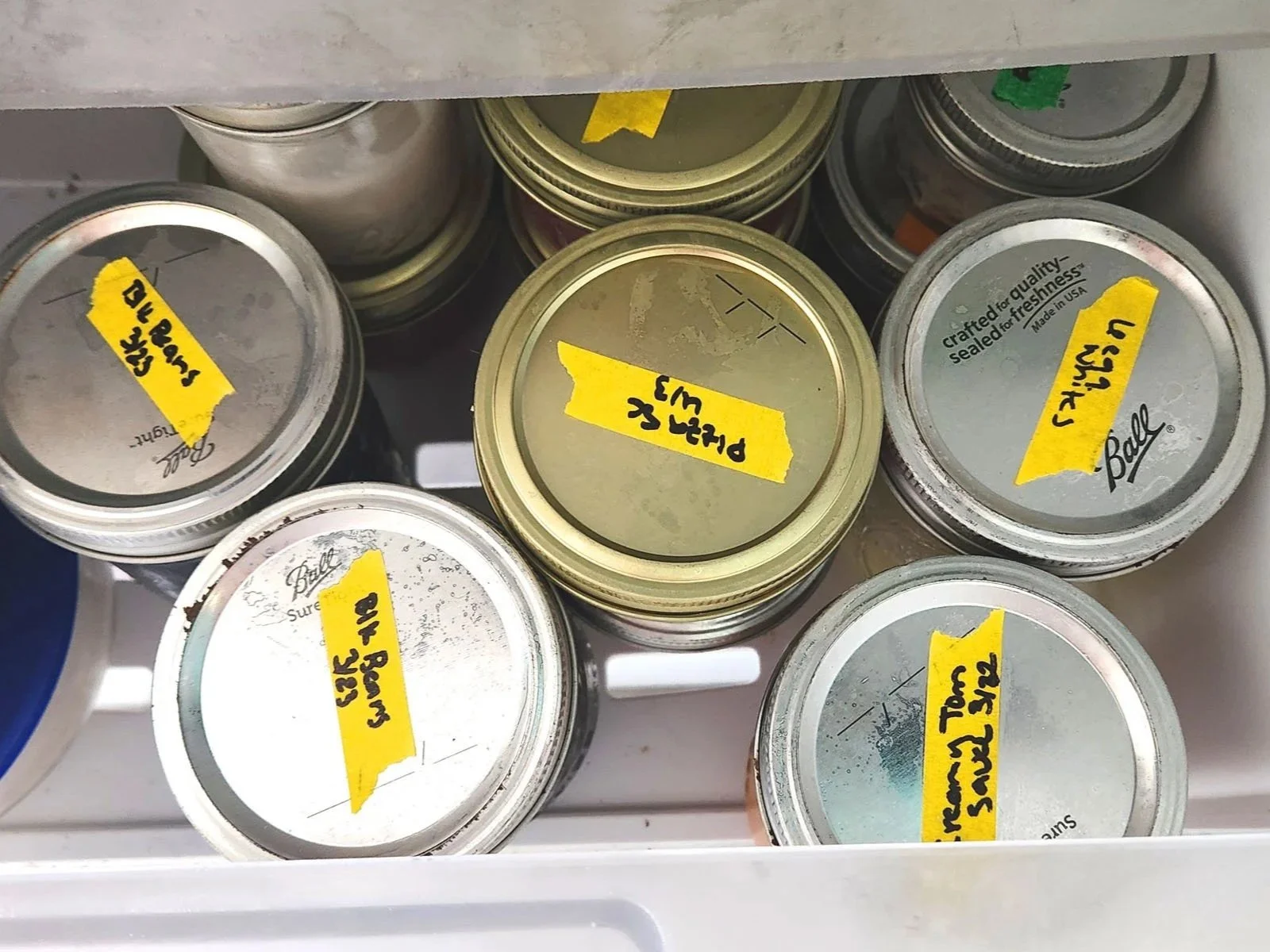
Grab your apron, it is time to talk about “cooking math.”

Now, before your eyes glaze over, this isn’t real math.  It’s a time-saving strategy based on a simple truth; it only takes like 10% more time or effort to make 100% more food.

(Okay, I made those numbers for illustration purposes, which proves this is not real math. You can’t make up the numbers in real math! But the reasoning is sound, the logic holds).

Read More
Confessions of a Freezer Squirrel: The Costco Breakdown

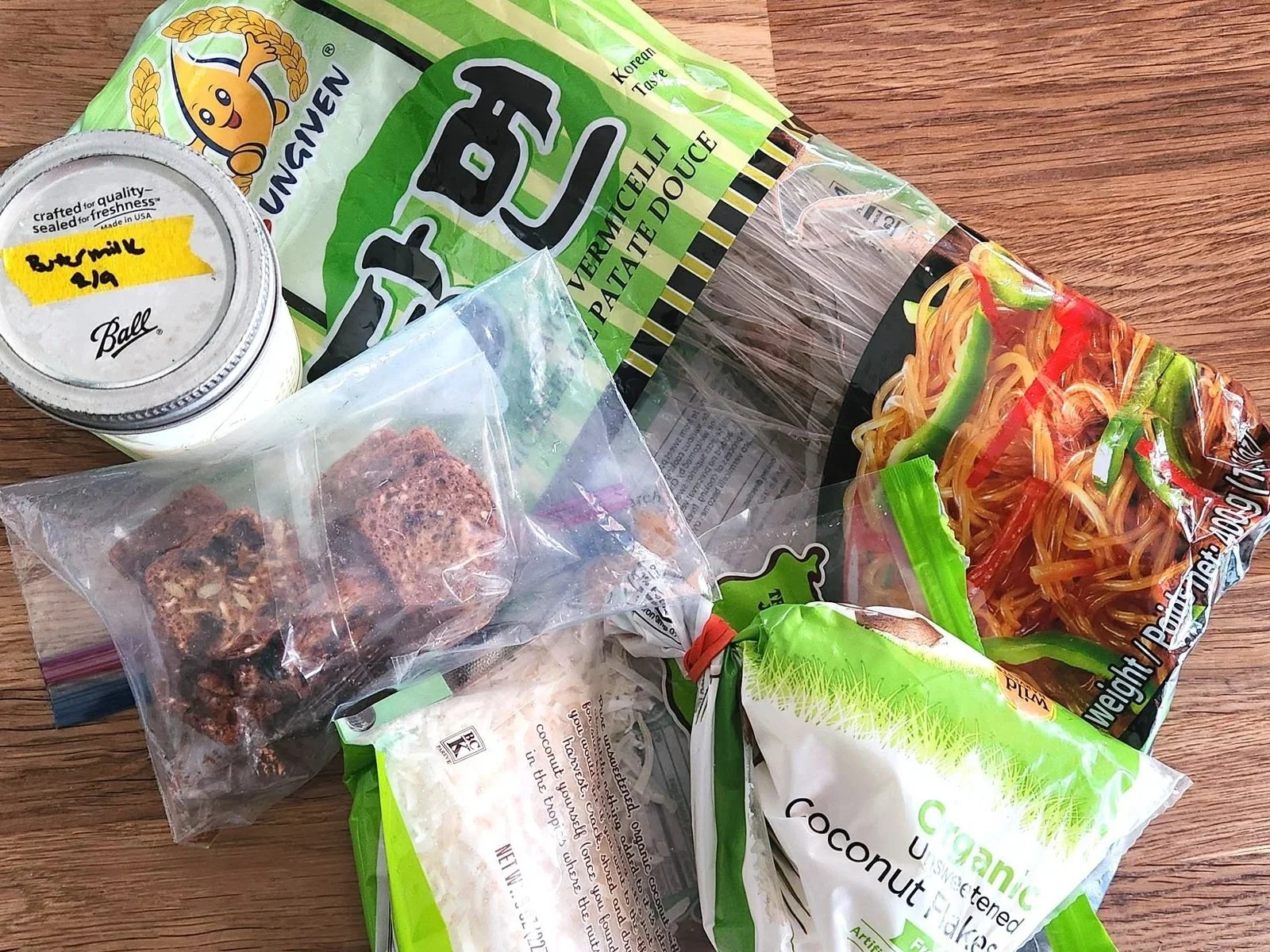
You know how squirrels in the fall are constantly picking up treasures and burying them in special little hiding spots around the yard? They are stocking up for the cold winter ahead. Saving the abundance of now for later.

I am exactly like that with my freezer.  I am constantly finding little culinary treasures and tucking them away.

Read More
Meal Planning Made Real: Why I’m Having a Summer of Sandwiches

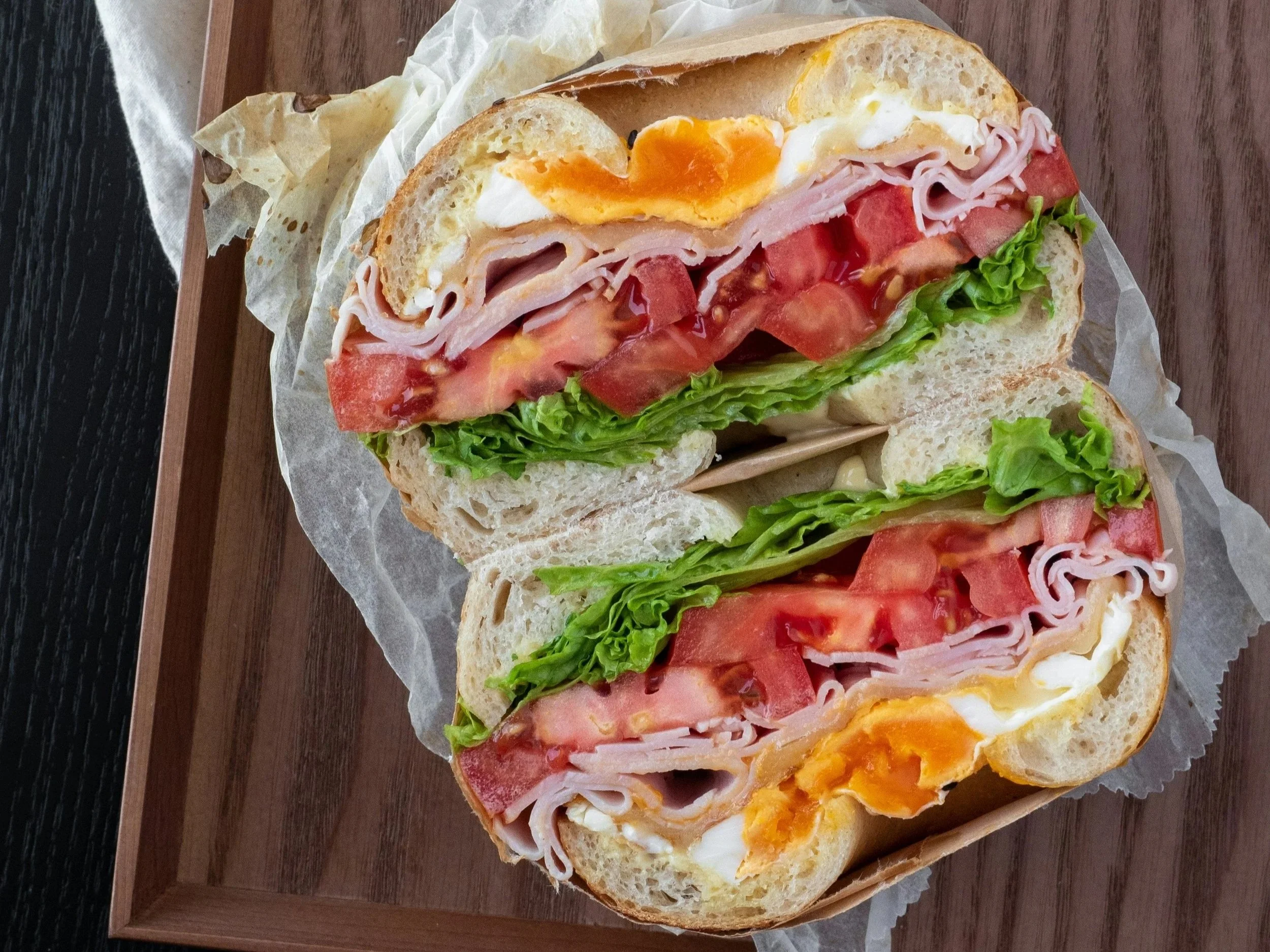
I have found that having gentle parameters or themes can actually be incredibly helpful for fostering creativity, including when it comes to meal planning. Instead of restricting, it’s about focus. It means picking a food category or ingredient you’d like to explore more of and looking for fun ways to make that happen.

This summer, I am taking a focused approach to add interest, excitement, and creativity to the table. My summer meal planning theme is sandwiches.

Read More
4 Reasons to Work with a Licensed Nutritionist (It's Not About the Number on the Scale)

If you’ve considered working with a nutritionist but aren't sure if it’s for you (or if you’re worried I’m just going to put you on a scale, hand you a rigid meal plan, and send you off with a belittling lecture), let’s clear the air.

Here are four reasons to add a licensed nutritionist to your care team and how, together, we can make food feel good again. Because you are allowed to eat what you enjoy and enjoy what you are eating.

Read More
Meal Planning Made Real: Spring Refresh

Seasonal changes always tend to be a little bumpy. Be it what to wear or what to eat, it is hard to remember what worked last year. Spring, as we transition from long dark winter to brighter days, can feel particularly jarring.

From a diet-culture view this is also the time that “spring detoxes” start to gain steam. Diet culture is predictable; it capitalizes on these moments of uncertainty to make us collectively feel bad about our bodies and worried about our health.

But we aren't doing that here. Instead of a "cleanse," let's talk about a refresh.

Read More
How to Meal Plan Without the Burnout: A Gentle Nutrition Guide

This post was first written in 2021, but my view on meal planning has evolved since then. Through my own recovery from rigid, orthorexic eating patterns and my work as a clinician, helping others find confidence in food without restriction, I’ve learned that a “perfect” plan is often the enemy of a sustainable one.

I still contend there are as many ways to meal plan as there are meals in a week. The key is finding what works for you.

The single biggest factor in long-term health isn't a specific diet but rather eating a wide variety of foods consistently. To do that without losing your mind, you need a system—not a set of rules.

Read More
How to End Daily Dinner Decision Fatigue with Flexible Meal Planning

Whether you are single and cooking feels like a hassle for just one person, or a parent fielding a million questions a day (why do we have eyebrows?) along with alllllll the household food opinions, we’ve all been there: staring into the fridge, too tired to think, too hungry to wait (bonus points for a toddler in meltdown).

And that is just dinner. It is easy to feel resentful of the fact that we need to eat so many damn times each day.

Read More
Intention is Everything: Reclaiming Healthy Behaviors from the Grips of Diet Culture

As you begin to explore the anti-diet or Intuitive Eating arena, a specific kind of confusion often sets in. You might find yourself wondering things like:

"If I’m anti-diet, does that mean I’m never allowed to eat a salad or go for a run again? Am I a 'bad' anti-dieter if I actually enjoy vegetables?"

It’s a valid question. Because diet culture has hijacked health behaviors for so long, we have been conditioned to believe that kale and cardio are merely tools for body manipulation. Why would we ever hold a plank if not to shrink our waistlines?

Read More
Ditching Diet Culture: Anti-Diet Eating Takes Effort (and That's Okay)

When people first hear about rejecting diet culture, the idea of intuitive eating or adopting a non-diet/anti-diet approach, the reaction is rarely, “Cool, tell me more, this is the answer I have been looking for.”

More often, the idea sets off flashing red warning lights and a loud “Danger, Danger!” siren, followed by a list of objections that might sound suspiciously like your own internal monologue.

Approaching food and your body through this lens requires deep work to unlearn and untangle messages so ingrained you might not even realize they are there.

Read More
How to Manage Blood Sugar for Insulin Resistance & Perimenopause: A Gentle Nutrition Guide

My first true nutrition “a-ha moment” was learning about the blood sugar rollercoaster in a group nutrition class. It felt like the secret to fix my body, the one I was hoping to learn in my dietetics undergraduate program, but didn’t. When I started eating to stabilize blood sugar, I almost immediately felt less anxious, slept better, and had more energy.

I learned blood sugar can impact everything from your energy levels to your mood and is particularly relevant for those with insulin resistance, Type 2 diabetes, PCOS, or those navigating perimenopause.

Read More