
Confessions of a Freezer Squirrel: Cooking Math is the Best Math
Welcome back to the Freezer Squirrel Summer Series! 🐿️❄️
My freezer squirrel persona is back for another round. In part one of the series, The Costco Breakdown, I talked about the art of buying in bulk to save money and reduce food waste before it starts. Today, we’re shifting gears from shopping to cooking. Grab your apron, it is time to talk about “cooking math.”
Now, before your eyes glaze over, this isn’t real math. It’s a time-saving strategy based on a simple truth; it only takes like 10% more time or effort to make 100% more food.
(Okay, I made those numbers for illustration purposes, which proves this is not real math. You can’t make up the numbers in real math! But the reasoning is sound, the logic holds).
Whether you are simmering a small saucepan of barley or a giant Dutch oven, the stove runs for the exact same 45 minutes. The prep time barely changes, and you dirty the same number of pans. So why not make double—or triple—what you need and let your freezer store the rest?
If your immediate reaction is, “But I don’t want to eat chili for two weeks straight.” My friend, that is where the freezer comes in (trust in the freezer squirrel!). Plus, we aren’t just talking about fully finished reheat-and-eat meals here, we are also building a “kit” of time-saving (and money-saving!) building blocks for busy weeknights.
The Friday Pizza Night Kit
I fully support pizza in all its iterations – frozen, take-and-bake, pick-up, and delivery. But over the last few years, I’ve streamlined my homemade pizza game and now it is an almost effortless weekly tradition. (Usually Thursday nights in our house, if I’m being honest).
While making pizza from scratch takes a bit more active work than unwrapping a frozen pie, it’s remarkably inexpensive and infinitely customizable. Here is how I batch-prep our pizza nights a month at a time:
The Crust
I make a double batch of my go-to dough recipe (complete with secret beans!): Homemade White Bean Pizza Dough, which yields enough dough for four 13-14-inch pizzas. In our house, that is enough for 4 pizza nights (with a little leftover for breakfast or a snack!). I make dough once, divide into balls, and freeze. Boom! Weekly pizza for a month.
Don't want to make dough? Buy pre-made dough balls from the grocery store section (you can freeze these too!), or grab those refrigerated tubes or par-baked crusts.
The Sauce
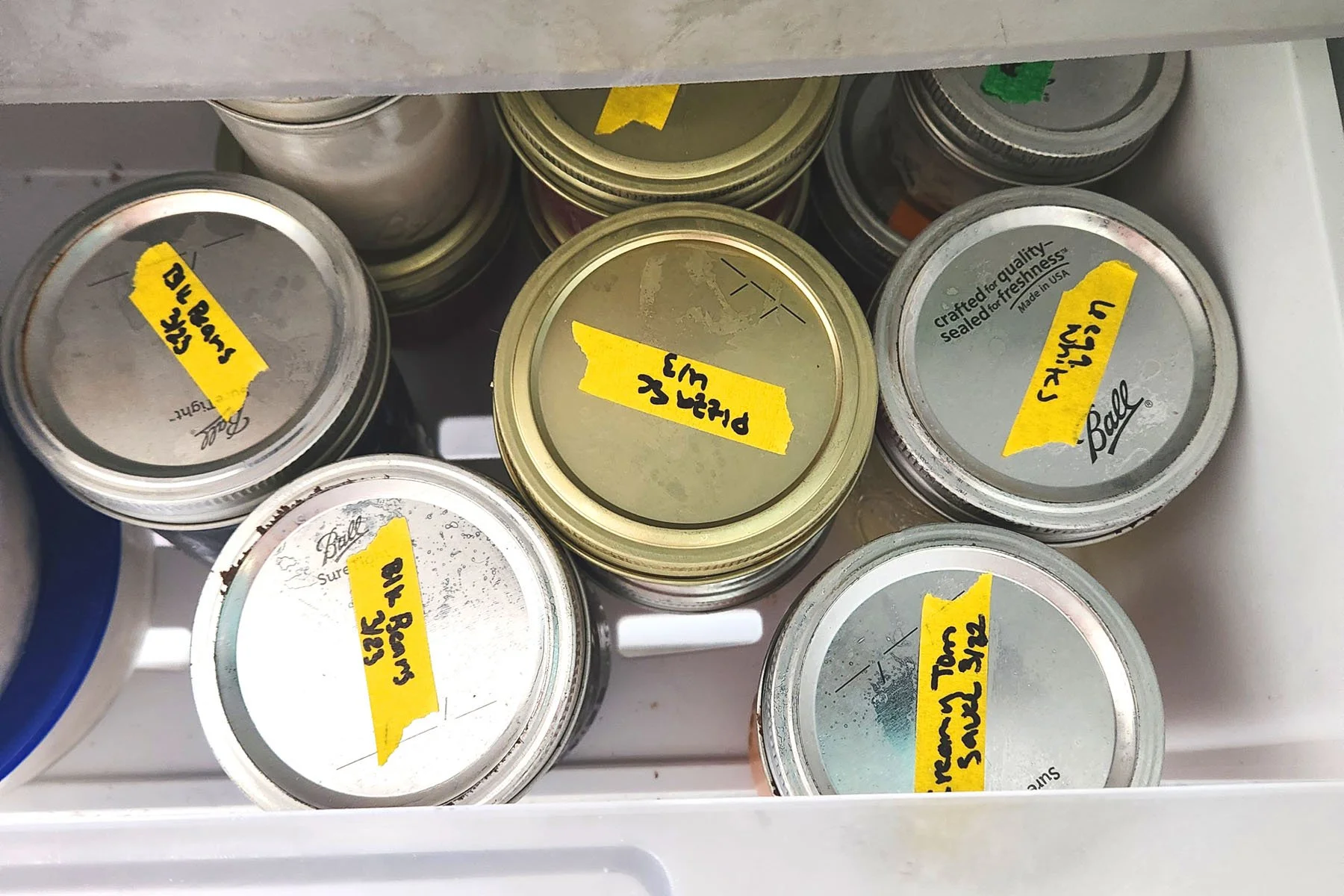
My favorite pizza sauce is sooooo simple: crushed tomatoes, minced garlic, dried oregano, red pepper flakes, a pinch of sugar, salt, and a glug of good olive oil. I buy giant cans of crushed tomatoes to make a big batch, then freeze it in half-cup portions in small glass jars.
The Cheese
Remember that bulk whole-milk mozzarella we broke down in Part 1? I pull an 8-ounce frozen chunk from the stash and shred it fresh right before building the pie. (You can also shred it ahead of time and freeze it in bags!)
The Toppings
This is where my freezer squirrel tendencies really shine! Pizza requires very small amounts of toppings, making it the ultimate outlet for "little bits." Beyond staples like pepperoni or olives, I’ll pull out tiny leftover portions of sautéed mushrooms, artichokes, spinach, or roasted red peppers that I tucked away from previous recipes (more on this in part 3!).
💡 The Day Before Pizza Night: Pull 1 dough ball, 1 small jar of sauce, 1 chunk of cheese, and your toppings of choice from the freezer to thaw in the fridge overnight. Easy-peasy and oh-so-yummy.
Flavors That Get Better with Age (Soups, Chili, & Curries)
Have you ever noticed that chili tastes way better the day after you make it?
Some foods genuinely benefit from a cook-cool-reheat cycle to let the flavors bloom and meld. When I worked as a catering chef, I also noticed a phenomenon where cooking a dish all day causes "sensory fatigue." You smell and taste it for hours, so by the time it's served, you barely want to eat it. But the next day? Or two weeks later out of the freezer? Yes, please!
Chilis & Soups
Every chili I have ever made, red, green, or white, freezes like a champ! Brothy, creamy, and pureed soups also freeze wonderfully.
Two Quick Caveats: Noodles get weird and mushy in leftover soup, so cook and store those separately. Large chunks of potatoes in stews can also develop a grainy texture after freezing, so I save potato-heavy soups for weeks when we plan to eat the whole batch fresh.
Indian Curries
We are obsessed with Indian food in my house (like my go-to palak paneer!). Indian curries are incredible for batch cooking. Dishes like dal, butter chicken, and even date-tamarind chutney freeze and thaw with zero loss in quality.
🫙 Storage Hack: Freeze liquids in wide-mouth pint or quart glass jars (leave at least an inch of headspace for expansion, give it more for larger jars!). A pint jar is the perfect single-serve portion for lunch. Alternatively, freeze soup flat in quart-sized freezer bags on a baking sheet. Once frozen solid, you can stack them vertically like a little library of delicious meals!
Ultimate Time Savors (Grains & Beans)
Cook Beans from Dry
I eat beans almost every day of the week (I even sneak them into pizza dough!). While canned beans are convenient, cooking them from dry is cheaper, tastes better, and gives you access to fun heirloom varieties.
Here is my Bean Math (it is a little more mathy than cooking math, but not much):
1 pound Dried Beans = 4 Pint Jars = 4 Cans of Grocery Store Beans
When I cook beans, I always cook a full one-pound bag, even if a recipe only calls for a cup. The cooking time is identical! I ladle the extra beans and their liquid into pint jars to freeze. Need beans in a pinch? Run cold water over the jar to loosen the edges, or microwave it (without the metal lid!) for a few minutes to thaw.
Whole Grains (Farro, Barley, Wild Rice, Brown Rice)
Hearty whole grains take 40 to 50 minutes to cook on the stove. Since they take that long regardless of volume, I always cook the entire package (or at least a double batch) and freeze the extra in quart-sized freezer bags pressed flat.
Having pre-cooked grains in the freezer means a healthy grain bowl or hearty soup base is ready in no time. And at a fraction of the cost of those 90-second microwave pouches.
Big-Batch Braises
Large cuts like pork shoulder or beef chuck roast take hours of slow braising to become melt-in-your-mouth tender. That cooking time is mostly fixed whether you are making three pounds or six pounds.
Taco Night:
Cook a massive batch of carnitas or barbacoa to freeze in dinner-sized portions.
Comfort Classics:
Braise a giant pot roast to eat fresh with mashed potatoes one night, then freeze the rest for quick beef sandwiches or a hearty stew in the future.
Versatile Proteins:
Braise a big batch of chicken thighs with garlic and citrus. Freeze the shredded meat to toss onto salads, tuck into a wrap, or top a grain bowl.
🥩 Pro-Tip for Reheating Meat: Always add a generous splash of the original braising liquid or pan juices into the freezer bag with your meat. It coats the protein and keeps it juicy and tender when reheated!
It’s Not Really Math, but It Works!
Cooking math and a well-curated freezer are my absolute favorite tools for turning chaotic weeknights into easy, stress-free meals without sacrificing variety.
There is, however, one golden rule: Never use cooking math on a recipe you've never tried before.
Stick to standard portions for brand-new recipes. Cooking math is a superpower reserved for meals you already love and know you’ll want to eat again. If a new soup recipe flops, that extra batch turns your freezer into a sad graveyard instead of a treasure chest of favorites!
Coming Up Next in the Summer Series...
In our third and final installment of the Freezer Squirrel series, we’re getting scrappy. I'll share my absolute favorite tricks for reducing food waste, rescuing garden gluts, and turning literal kitchen trash into culinary gold!
-
Cooked whole grains freeze exceptionally well. Let them cool completely, then spread them flat in zip-top freezer bags. To reheat, place in a covered microwave safe bowl with a splash of water and microwave about a minute, or toss them directly into a simmering soup or skillet meal.
-
The secret is freezing the cooked meat directly in its original braising juices, broth, or sauce. The liquid protects the meat from freezer burn and keeps the protein moist and flavorful as it reheats.
-
Absolutely, wide mouth mason jars are my go-to! The key? You need to leave room for expansion. Liquids expand when frozen, so always use straight-sided, wide-mouth mason jars and leave at least 1-inch of empty headspace at the top. Leave the lids slightly loose until the liquid is frozen solid, then tighten them for long-term storage.
The information provided is for educational and informational purposes only. It is not intended to be medical advice or to diagnosis, treat, cure or prevent any disease. This information does not replace a one-on-one relationship with a physician or healthcare professional. Dietary changes and/or the taking of nutritional supplements may have differing effects on individuals.
To learn more about how working with a nutritionist could help you, schedule a free 15-minute call.