Intention is Everything: Reclaiming Healthy Behaviors from the Grips of Diet Culture
Diet Culture Hijacked Your Healthy Behaviors
As you begin to explore the anti-diet or Intuitive Eating arena, a specific kind of confusion often sets in. You might find yourself wondering things like:
"If I’m anti-diet, does that mean I’m never allowed to eat a salad or go for a run again? Am I a 'bad' anti-dieter if I actually enjoy vegetables?"
It’s a valid question. Because diet culture has hijacked health behaviors for so long, we have been conditioned to believe that kale and cardio are merely tools for body manipulation. Why would we ever hold a plank if not to shrink our waistlines?
When you reject dieting, it can feel like you also have to reject vegetables and exercise, too. Like doing so is proof that you are really “out” of the diet game.
But here is one of diet cultures’ dirty little secrets: Health-promoting behaviors work better without the side of disordered eating and body shame they’re usually packaged in.
To Reclaim or To Retire? Untangling Health Behaviors from the Motives
Part of this work is untangling the behavior from the motive. It is not about what you’re doing; it’s about the intention behind it. There is a great deal of nuance in this process. You are learning what to bring with or reclaim from diet culture, what to leave behind, and what to put on a shelf for “maybe later.”
For me, that untangling has looked like this:
Reclaiming satisfying salads
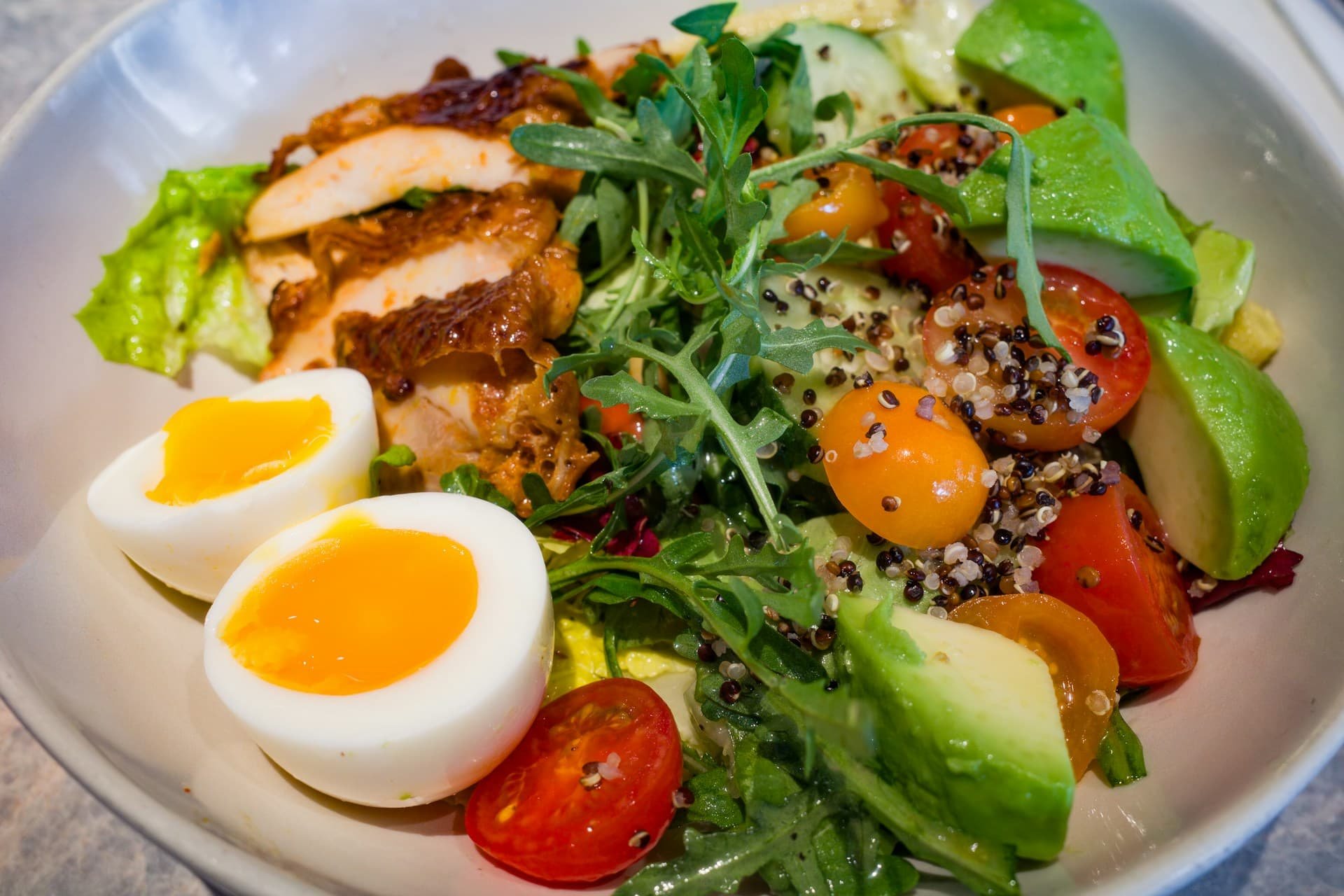
I genuinely love a big, crunchy salad (and I am seriously holding myself back from waxing poetically about what makes them so great). I reclaimed salads from the grips of diet culture when I stopped eating them to “be good” and started eating them because they tasted good.
Retiring the ghost of restriction
On the flip side, I love cabbage and I love soup, but I will likely never eat cabbage soup again. That dish is so linked to past rules and restrictions (longing to reach banana and milk day…iykyk), that just the thought of it causes a tightness in my chest. I am happy to leave it behind forever.
Moving my body, my way
I have found I feel my best when I move my body regularly, but I’ve decided diet culture can keep its burpees and mountain climbers. They don’t bring me joy; they simply feel like a punishment. So, at least for now? They’re out.
“For Now” is Fine
The most important thing to remember is that these choices don’t have to be permanent. An anti-diet approach isn’t about creating a new set of “never” and “always” rules.
Maybe right now, the thought of a green smoothie makes you want to scream because it reminds you of a restrictive cleanse. It is okay to leave it behind. You might find that in a year, as the ghosts of diets past have settled, a green smoothie sounds like the perfect breakfast on a hot summer day. Or maybe you won’t, and that is fine, too.
That’s the beauty of eating intuitively: You get to decide what brings you pleasure and satisfaction, not some arbitrary list of diet rules.
One Big Question: A Weight-Neutral Reality Check
Diet culture is very clear about why you should follow its rules: to manipulate and shrink your body.
If you misstep, break a rule, or cave to a craving, it uses a potent mix of shame, guilt, and fear to get you back in line. It tells you to “earn” your dinner with a spin class or face retribution for yesterday’s pizza by eating only raw celery today.
Compare that to the anti-diet approach of joyful movement and gentle nutrition where the why is your well-being.
Instead of guilt, you are driven by curiosity, self-care, and body respect. You move because it buoys your mood and eases joint pain. You eat veggies because you like how they taste and the fiber keeps your digestive tract comfortably humming along.
But since behaviors (eating a salad, going for a walk) look the same on the outside, how do you figure out your true intention on the inside?
It is time for a weight-neutral reality check. When you find yourself questioning a behavior like heading to the gym, ordering a salad, or skipping a workout, ask yourself One Big Question:
If my body were guaranteed to stay the same size it is right now, would I still make this choice?
This question forces you to look at the decision from the dual lenses of body respect and self-care. Here is how to navigate the nuance of your answer:
Check for Punishment
If your answer is, “No, I am only doing it to ‘make-up’ for what I ate last night” your intention is punishment. It is driven by fear.
Check for Pleasure
If you answer is, “Yes, I’d go for a walk because it helps clear my head” or “I’d still eat these veggies because I love them dipped in ranch” these choices are based in pleasure and satisfaction.
Check for Attunement (The “Fantasy Land” Check)
This is where diet culture can get a bit sneaky. Sometimes, if we know our weight won’t change, we might be tempted to make a choice that makes us feel like garbage (like eating a bag of chips for dinner).
This is where you have to look deeper. Ask: “Will this choice leave me feeling cared for and comfortable in my body an hour from now?”
If your weight-neutral choice is to eat a whole bag of chips, but you know doing so will leave you parched and uncomfortably full with a stomachache, then it isn’t an act of self-care. It is numbing out.
The Power of Interoceptive Awareness
If you ask the One Big Question and the answer is tricky or feels unclear, it is usually because you are still learning how to listen to your body’s internal cues.
Anti-diet work isn’t about ignoring your body or eating like consequences don’t exist; it is about becoming deeply attuned to it. It means basing your choices on interoceptive awareness, the internal signals (hunger, fullness, heart rate, a full bladder) that tell you what your body needs to meet its needs, rather than focusing on how it looks.
When you build up your interoceptive awareness and go through the effort of making peace with food, you don’t need a diet rule to tell you not to eat the whole bag of chips for dinner. You don’t do it because you know, physically and emotionally, how it will make you feel. You choose the reclaimed salad and joyful movement not to shrink your body, but because your body is literally signaling that those things will feel good.
Anti-Diet Basics: Shifting from External Rules to Internal Signals
We’ve covered the basics of moving from diet culture to embracing an anti-diet approach these three posts. We started by acknowledging the effort it takes to unlearn the noise of diet culture. We looked at the emotional barriers that keep us stuck in the cycle of shame. And finally, we’ve reclaimed or retired diet culture driven behaviors, shifting our focus from punishment to self-care.
Reclaiming your relationship with food and body is a journey of a thousand tiny intentions. It’s about asking the "One Big Question" until it becomes second nature. It’s about knowing that you can leave things behind, bring things with you, or change your mind whenever you want.
You are the only person who lives in your body. It’s time you were the one in charge of it.
Take a moment to look at your current eating or movement behaviors. Pick one and put it through the weight-neutral reality check. Are you doing it for pleasure or punishment? If it’s a punishment, what would it look like to retire it for now and try something that feels more nourishing and supportive?
The information provided is for educational and informational purposes only. It is not intended to be medical advice or to diagnosis, treat, cure or prevent any disease. This information does not replace a one-on-one relationship with a physician or healthcare professional. Dietary changes and/or the taking of nutritional supplements may have differing effects on individuals.
To learn more about how working with a nutritionist could help you, schedule a free 15-minute call.